
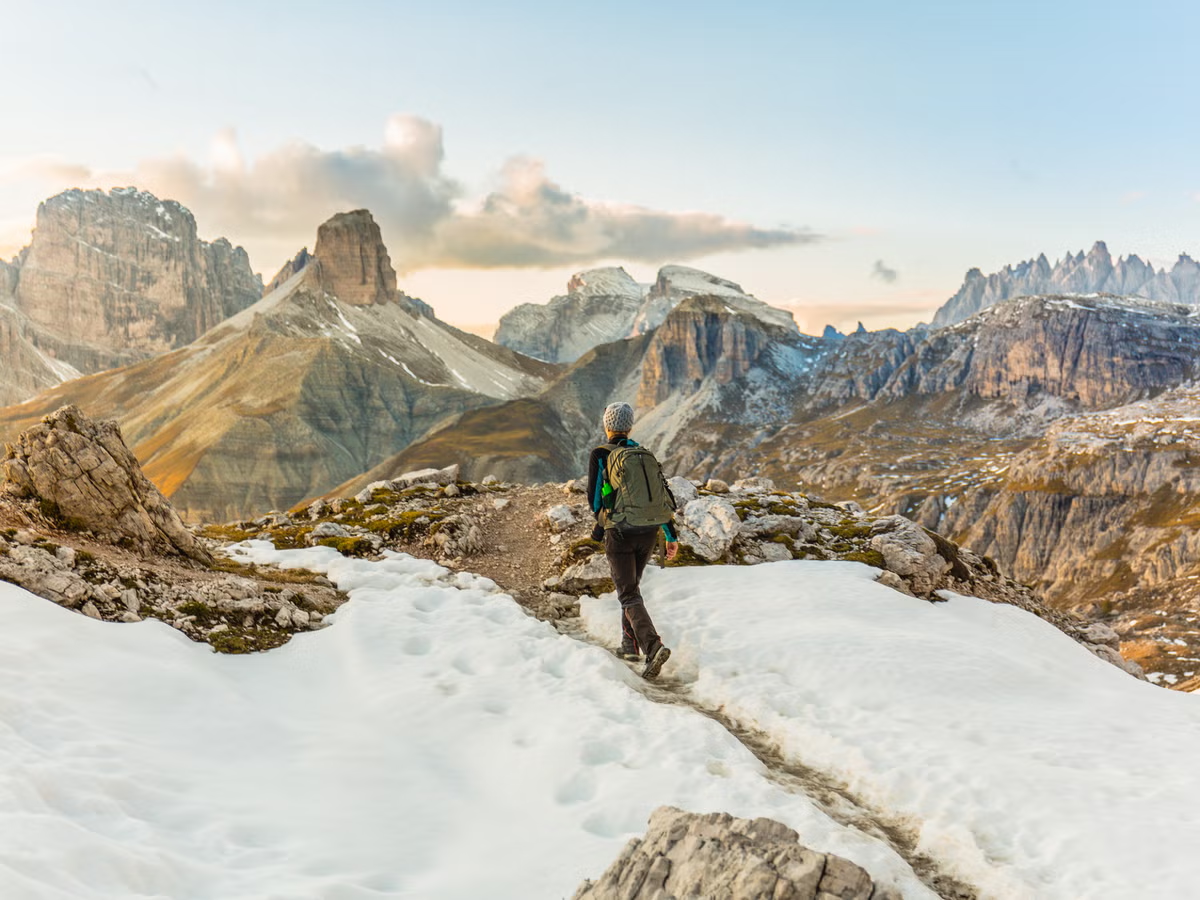
The first breath hits cold, sharp, and clean. Somewhere above the tree line, the world turns white — not the soft white of postcards, but a deep, endless silence painted over rock and sky. Your boots sink into snow that squeaks under pressure. You lift your head and see nothing but frozen ridges dissolving into clouds. The wind howls once, then fades.
This is Europe in winter — not the Europe of summer crowds or alpine resorts, but the continent’s quiet, untamed side. For a few months every year, the mountains change their language. Trails once crowded with hikers go mute, rivers turn to glass, and even the smallest peaks seem bigger beneath their blankets of snow.
Yet, strangely, few adventurers ever see it.
A World Rewritten by Snow
Most people come to Europe for its summer treks: the green valleys of Switzerland, the flowered meadows of the French Alps, or the dramatic cliffs of Norway. But when winter comes, those same paths become something else entirely — elemental, stripped bare, mysterious.
The Dolomites in northern Italy, for example, transform into vast cathedrals of ice and light. Their limestone spires gleam under a sun that never rises high, casting long, blue shadows across the snow. In Slovakia, the High Tatras seem to breathe frost; each gust of wind carries a flurry of crystal dust. And in Scotland, the Highlands are reborn under low skies — a landscape of white silence and dark stone where even time seems to move slower.
You learn quickly that winter hiking in Europe isn’t about the summit. It’s about presence. The rhythm of your breath, the crunch beneath your boots, the sudden warmth of sunlight bouncing off a frozen slope — each step is both effort and meditation.
The Stillness That Challenges You
At first, it feels almost too quiet. The birds are gone. The streams are sealed in ice. Only the wind moves. But the deeper you go, the more alive it becomes. You notice tracks — a hare darting between pines, a fox circling the edge of a ridge. The world may be asleep, but it’s breathing under the snow.
Winter teaches you patience. You move slower, plan better, respect the terrain in a way summer rarely demands. The cold doesn’t forgive mistakes. Frostbite, hidden crevasses, avalanches — all these dangers keep you alert. Yet it’s that very sharpness that makes the experience unforgettable.
There’s a purity in this kind of adventure. When you’re out there — just you, the snow, and the sound of your heartbeat — you understand something most people miss. Adventure isn’t just movement. It’s awareness.
Learning to Walk Differently
Winter trekking changes the very act of walking. You strap on snowshoes or clip on crampons. Each movement becomes deliberate, controlled. Sometimes you use an ice axe to balance, sometimes you crawl on all fours over a frozen ridge.
You feel your body adapting. The layers of clothing — base, fleece, shell — form your armor. A flask of hot tea becomes a treasure. Even your breath feels different in the thin, icy air.
And though it demands more effort, the reward is profound: solitude. On some days, you may walk for hours without seeing a single person. The mountains belong to you alone. The stillness feels almost sacred.
Where the Cold Beckons
If you ever dream of trying it, Europe has no shortage of winter trails waiting in silence.
- The French and Italian Alps offer the classic alpine crossings: think Mont Blanc’s frozen ridges and vast glacier valleys where every sunrise paints the snow pink.
- The Dolomites, Italy, are perfect for snowshoe hiking — a labyrinth of limestone towers rising from a sea of white.
- The High Tatras, Slovakia and Poland, combine accessible peaks with serious winter charm — crisp air, old pine forests, and frozen tarns that shimmer like glass.
- Norway’s Rondane National Park gives the feeling of true isolation, the horizon stretching endlessly beneath pale northern light.
- Scotland’s Highlands, raw and mystical, invite you to walk through snow and fog with the ghosts of legends at your side.
Each region tells its own story — of survival, beauty, and quiet resilience.

From mountains to oceans, delivered to you. Follow us on Lingkar Bumi WhatsApp Channel.
A Season for Reflection
Winter doesn’t just reshape the landscape; it reshapes the way you see it. In summer, the Alps are alive with color and sound. In winter, they whisper. You start noticing small details — the texture of frozen moss, the sudden silence before a storm, the thin line of your breath hanging in the air.
It’s also the season when the consequences of climate change become heartbreakingly visible. Glaciers shrink, snowlines rise higher, and the old routes shift every few years. For outdoor lovers, that realization cuts deep. Hiking in winter isn’t only adventure — it’s witnessing a world in slow transformation.
There’s beauty, but also risk. Days are short, temperatures cruel, and storms arrive without warning. Preparation becomes part of the ritual: studying avalanche forecasts, packing emergency blankets, telling someone your route.
You learn to carry respect like another piece of gear. The mountains may look peaceful, but in winter they have their own authority.
Yet every hardship — frozen fingers, heavy boots, sleepless nights in mountain huts — becomes a small victory. And every step through that frozen silence adds a story no photo can tell.
When You Return
When you finally step back into the valley — cheeks flushed, clothes damp, mind strangely quiet — you realize how much you’ve changed. Winter hiking strips away distraction. It reminds you how small you are, and how alive that smallness feels.
The mountains you knew in summer seem different now — gentler, almost shy. You’ve seen their real face, and it’s made of ice and patience.
Most people will never know that face. They’ll stick to ski resorts, hot cocoa, and postcard views. But you — you’ll remember how it felt to walk alone under a pale sun, how the snow whispered beneath your feet, how silence itself became your companion.
And someday, when someone asks why you hike in winter, you’ll smile and say. Because the mountains are honest when they’re cold. (Wage Erlangga)


1 thought on “Ready for Adventure? Try Europe Winter Hiking”