
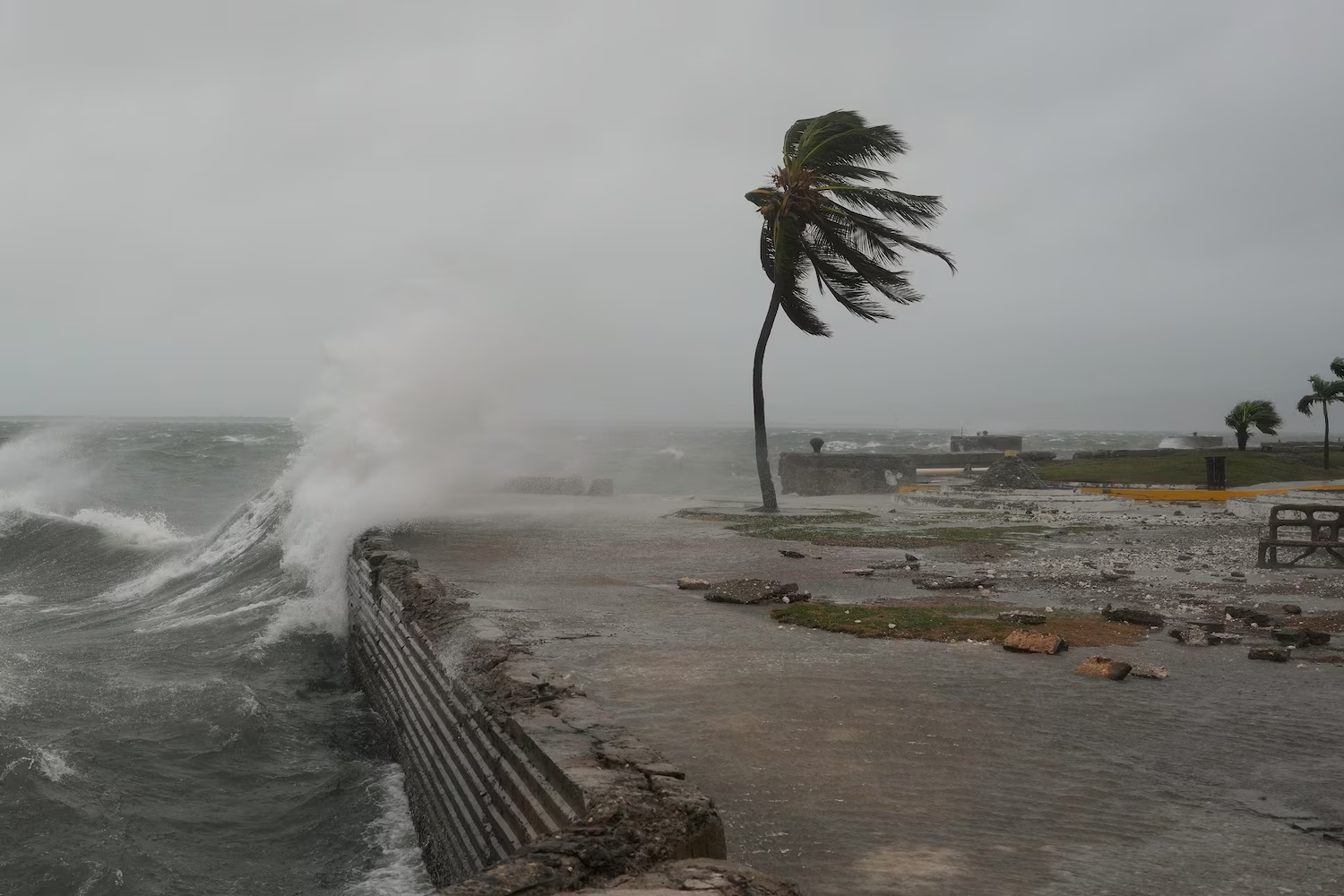
As Hurricane Melissa devastated parts of the Caribbean this week, killing dozens and leaving thousands homeless, its name quickly became one of the top-trending topics on Google in Europe. Yet meteorologists say the continent is unlikely to experience more than mild weather disruptions from the remnants of the powerful Category 5 storm.
Melissa made landfall in Jamaica on Monday with sustained winds near 260 kilometers per hour, according to the U.S. National Hurricane Center (NHC). The storm then swept across parts of Haiti and eastern Cuba, causing catastrophic flooding and widespread power outages.
By Wednesday, the NHC reported that Melissa was moving northeast into the open Atlantic, beginning its transformation into an extratropical system — a weakened storm driven by temperature contrasts rather than the warm ocean energy that fuels tropical hurricanes.
“The storm has already started losing its tropical characteristics,” said Michael Lowry, hurricane specialist and meteorologist at the U.S. National Hurricane Center, quoted by The Washington Post. “As it heads toward cooler waters, it will gradually merge with the mid-latitude weather systems typical of the North Atlantic.”
This process significantly reduces the risk to Europe. The UK Met Office said in its latest outlook that the remnants of Melissa “may bring bouts of heavy rain and strong winds to western coastal areas” — particularly Ireland and parts of the UK — but no severe or hurricane-force impacts are expected.
Northern Europe Stays Safe
Further north, meteorological agencies in Norway and Sweden confirmed that the storm’s remnants are unlikely to reach Scandinavia. “The current models show the system dissipating over the North Atlantic before approaching the Norwegian Sea,” said Hilda Westberg, meteorologist with the Swedish Meteorological and Hydrological Institute (SMHI). “There is no threat to Sweden or the Baltic region.”
France’s national weather agency, Météo-France, also indicated that only “residual moisture and moderate winds” might affect the country’s Atlantic coast later this week, with no warnings issued for inland regions.

From mountains to oceans, delivered to you. Follow us on Lingkar Bumi WhatsApp Channel.
Why Europe Cares
Despite minimal risk, interest in Hurricane Melissa surged across Europe. Analysts attribute this to growing public awareness of how climate change is fueling stronger storms — even if they rarely strike European shores.
“This part of the Atlantic is extremely warm right now — and not just the surface,” said Akshay Deoras, a research scientist at the University of Reading’s Department of Meteorology, in an interview with The Guardian. “Deeper ocean layers are also unusually warm, providing a vast reservoir of energy for storms like Melissa.”
According to Climate Central meteorologist Bernadette Woods Placky, more than 90 percent of excess global heat is absorbed by oceans. “That extra heat supercharges storms,” she said. “Melissa is another example of how climate change amplifies natural weather systems.”
Possible Indirect Effects
While no direct damage is expected, European maritime and energy sectors could see minor disruptions. The remnants of Melissa are forecast to stir large swells in the North Atlantic, prompting shipping advisories between Ireland, the Azores, and Portugal. Coastal authorities have warned small vessels to remain in port until early next week.
Logistics experts say rough seas may briefly delay trans-Atlantic cargo routes, though aviation and continental travel remain unaffected.
Even if Europe escapes the worst, Melissa’s message resonates strongly across the continent: the world’s weather systems are interconnected, and warming oceans anywhere can shape climate risks everywhere.
“Hurricane Melissa shows how climate-driven extremes in one region can have economic and environmental consequences far beyond their point of origin,” said Deoras. “It’s not about where the storm hits, but what it tells us about the planet’s changing balance.”
As Europe watches from afar, the humanitarian crisis in Jamaica and Haiti continues to unfold — a stark reminder that the true devastation lies thousands of kilometers away, while the warning signs ripple worldwide. (Wage Erlangga)


