
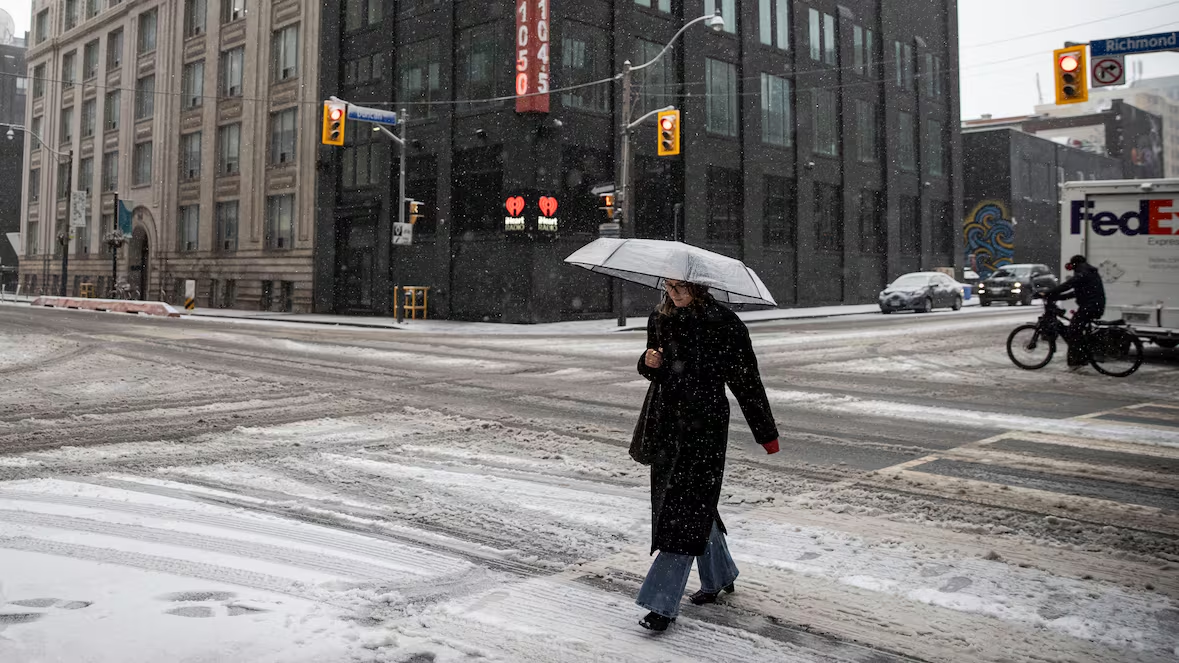
Environment Canada is warning residents in the GTA to be wary of potential snowfall this weekend. (Evan Mitsui/CBC)
Environment and Climate Change Canada (ECCC) has issued a special weather statement warning of possible accumulating snow across southern Ontario on Sunday, November 9, marking what could be the first significant snowfall of the season.
The federal weather agency said a low-pressure system moving from the American Midwest is expected to bring a mix of rain and snow to the region, with snowfall amounts ranging from a few centimetres up to 10 centimetres in some localized areas.
“Snow is likely on Sunday,” ECCC stated in its latest advisory, noting that confidence remains moderate regarding the storm’s intensity and path. Drivers are advised to prepare for reduced visibility and slippery roads, especially during morning and evening travel hours.
Late Start for Canada’s Winter
While an early November snowfall is common in southern Ontario, this year’s first snow is arriving later than usual — a trend scientists say has become more consistent over recent decades.
According to Natural Resources Canada’s Canada’s Changing Climate Report (2019), the country’s average snow cover duration has decreased by 5 to 10 percent per decade since the early 1980s. This reduction is linked to warmer autumn temperatures and a delayed onset of winter conditions.
A 2021 study published in Atmosphere-Ocean by Ross D. Brown and colleagues found that the number of days with snow cover across Canada has declined steadily since 1955, particularly in southern regions. The research, based on decades of in-situ snow measurements, shows that the first snowfall now arrives one to three weeks later in many areas compared to mid-20th-century averages.
“Observed snow-cover reductions are consistent with a warming climate,” Brown’s team wrote, adding that delayed autumn snow and earlier spring melt are among the clearest signals of climate change in northern latitudes.
Economic and Environmental Impacts
The later arrival of snow has implications for several sectors of the Canadian economy.
In recent years, ski resorts and winter tourism operators have faced shorter seasons and increased dependence on artificial snowmaking to maintain trails. Data from the Canadian Ski Council show that unpredictable early-winter weather has led to fluctuating visitor numbers and higher operational costs.
Water management experts are also monitoring the effects of shifting snow patterns. The timing of snowmelt affects spring runoff, groundwater recharge, and flood risk. A later start and quicker melt can reduce water availability in early summer — especially in regions like the Prairies that rely heavily on gradual snowmelt for soil moisture.
Hydrologists at the University of Saskatchewan have warned that changing snow cycles could disrupt the country’s freshwater systems, which depend on snowpack as a natural reservoir.
Canada Climate Experts See a Clear Trend
Climate research organizations, including Ouranos in Montreal, have reported that snow accumulation across much of Canada has been declining since 1981. In its 2024 assessment, the consortium found that under moderate greenhouse gas scenarios, the continuous snow-cover season could shorten by up to two months by 2050 in southern Canada.
Environment and Climate Change Canada’s long-term records support this trend. Nationwide surface temperature data indicate that autumn temperatures have risen by about 1.7°C since 1948, contributing to more rainfall instead of snow in early winter.
Still, meteorologists caution that year-to-year variability remains high. “One late snowfall doesn’t mean winter is gone,” said ECCC spokesperson Steve Flisfeder in a recent Ontario forecast briefing. “But the broader pattern clearly shows milder autumns and delayed snow cover becoming more common.”
Sunday’s Forecast
ECCC said conditions will continue to evolve through Saturday as the low-pressure system moves northeast. Residents across southern Ontario, including Waterloo Region, Wellington County, and Guelph, are urged to monitor local forecasts and avoid unnecessary travel if snow intensifies Sunday morning.
“Even light snowfall at this time of year can make roads slippery,” the agency warned.
As Canadians prepare for the first snow of the season, scientists agree on one thing: the country’s legendary winters are changing in timing and duration, and the delay in this year’s snowfall is part of a measurable national trend. (Wage Erlangga)
Read also:
From mountains to oceans, delivered to you. Follow us on Lingkar Bumi WhatsApp Channel.


